 派想网
派想网尼古拉斯·科卡利斯博士
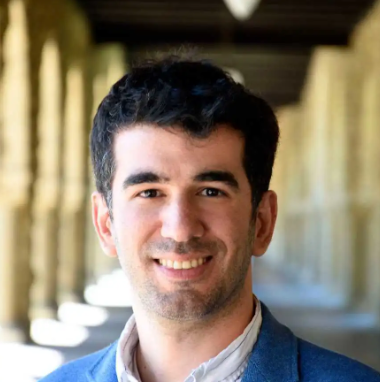
技术主管
Nicolas Kokkalis博士是斯坦福大学博士,2018年担任斯坦福首个去中心化应用课程CS359B的讲师。他的工作重点是将分布式系统与人机交互相结合,将加密货币带给普通人。
他先获得了计算机科学的学士和硕士学位,这促使他在斯坦福大学攻读博士学位,随后在该校计算机科学系继续担任博士后学者。 在博士期间及之后,尼古拉斯创建了一个早期框架,用于在容错分布式系统上编写“智能合约”,并创建了多种以人为中心的产品,包括拥有超过2000万用户的在线社交应用和一个众人驱动的电子邮件助手。
作为加密货币技术、金融和社会潜力的坚定且长期信念者,他决心将其突破现有局限,致力于将区块链的力量带给更多人。通过创立Pi Network,他希望通过提升现有区块链体验,并通过以用户为中心的设计理念,赋能每个人共同创造、建设和体验未来的在线生活。
Dr. Nicolas Kokkalis
Head of Technology
Dr. Nicolas Kokkalis is a Stanford PhD and instructor of Stanford’s first decentralized applications class, CS359B, in 2018. His work focuses on combining distributed systems and human computer interaction to bring cryptocurrency to everyday people.
He started with a BS and MS in Computer Science, which led him to do a Ph.D. at Stanford University and then continue as a Postdoctoral Scholar in the Computer Science department there. Through and after his PhD work, Nicolas created an early framework for writing “smart contracts” on fault tolerant distributed systems, and multiple human-focused products including online social applications with over 20M users and a crowd-powered email assistant.
As a strong and long-term believer of the technical, financial and social potential of cryptocurrencies, he is determined to move them beyond their current limitations and is committed to bringing the power of blockchain to more people. With the founding of Pi Network, he aims to accomplish this by improving the current blockchain experience and empowering everyone to create, build and experience the future of online life through a user-centric design philosophy.
范成雕博士

产品主管
范成雕博士是斯坦福大学人类学博士,利用社会计算在全球范围内释放人类潜能。
成雕毕业于斯坦福大学,获得人类学博士学位,专长于人类行为和人类群体研究,她后来的研究兴趣集中在人机交互和社会计算领域——特别是我们如何利用技术积极影响人类行为和社会。
她对人类社会与行为的深刻理解,以及这些原则——这些原则曾被用于以往关于生产力软件、大规模社交交流以及在线人际关系与互动的研究项目——影响了她在Pi Network的工作。在Pi Network中,承侨将同样的知识和原则应用于区块链和去中心化,作为赋予人们更便捷、更频繁协作和建设公用事业的真正工具。
通过优化人机交互,并通过网络展望未来的人类社会经济生活,成弹构建了圆周网络,动员全球个人参与并获得回报,建立包容性的生态系统,让全球公民释放和捕获自身能动性,进而创造服务和生产,惠及社会和世界。
Dr. Chengdiao Fan
Head of Product
Dr. Chengdiao Fan is a Stanford PhD in Anthropological Sciences harnessing social computing to unlock human potential on a global scale.
Chengdiao finished her Ph.D. in Anthropological Sciences from Stanford University, with expertise in human behavior and human groups studies, and her later research interests have focused on human-computer interaction and social computing—specifically, how we use technology to positively impact human behavior and societies.
Her deep understanding about human societies and behavior and those principles—which have been used for previous research projects around productivity software, scaled social communications, and online human relationships and interactions —have influenced her work with Pi Network. With Pi Network, Chengdiao applies those same knowledge and principles to blockchain and decentralization as a real instrument to empower people with more accessible and frequent opportunities for collaboration and utility-building.
By optimizing human-computer interaction and envisioning the future human socioeconomic life through the web, Chengdiao is building Pi Network to mobilize individuals all over the world to participate and be rewarded for their contributions, and establish an inclusive ecosystem for global citizens to unleash and capture their own